Poison ivy is one of the most common complaints we hear about from property owners across Simcoe County — and one of the hardest problems to solve without chemicals. Our goats eat it. Happily, thoroughly, and without any reaction at all.
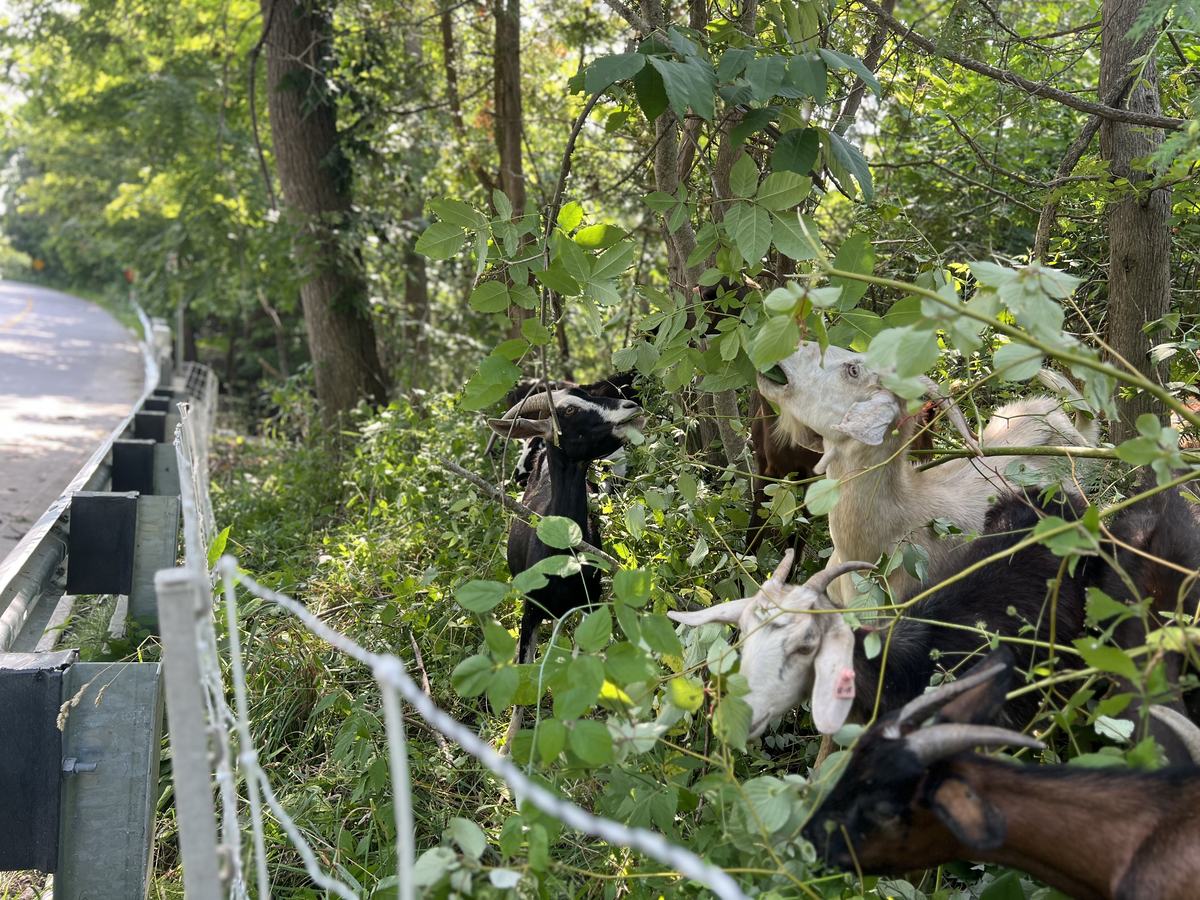 If you have poison ivy along a fence line, at the edge of your woodlot, around a shed, or spreading through a ditch, you already know the usual options are poor ones. Spraying puts herbicide where your family and pets walk. Pulling it out by hand means a rash that can last for weeks. Mowing or weed-whacking flings the oil into the air. And burning it is genuinely dangerous.
Goats offer a way around all of it. They browse poison ivy the way other animals browse clover — it is ordinary food to them, and the oil that causes the rash in people has no effect on them at all. They will work the vines up a fence, the ground cover under trees, and the tangled edges that a person would need full protective gear to touch.
Why Goats Can Eat Poison Ivy When You Can't
The rash comes from urushiol, an oil found in every part of the poison ivy plant — leaves, stems, vines and roots. In people, the immune system reacts to it, and the result is the blistering rash most of us have run into at least once.
Goats don't have that reaction. Urushiol simply doesn't trouble them, so poison ivy is just another leafy plant on the menu. In fact goats are browsers rather than grazers by nature — they would rather strip leaves off woody, viney, scrubby growth than eat lawn grass, which makes poison ivy close to an ideal food for them.
- ✔ No herbicide — nothing sprayed where children or pets play
- ✔ No rash — nobody has to handle the plant
- ✔ No burning — and none of the danger that comes with it
- ✔ Steep and awkward ground is fine — goats go where mowers can't
- ✔ Nothing disturbed — no machinery tearing up the soil
Why the Usual Methods Struggle
Poison ivy is native to Ontario, and it is very good at surviving. It spreads both by seed and by underground runners, so a patch you can see is usually connected to more that you can't. That is why it comes back so reliably.
Spraying
Works, but puts herbicide into ground you may not want it in — near vegetable gardens, wells, waterways, pets and children. Often needs repeating anyway.
Pulling by hand
Effective if you get the runners, but the oil transfers through gloves, sleeves and tools very easily. Most people end up with a rash.
Mowing or trimming
Throws sap and plant fragments into the air, which is how a lot of people get a rash on their arms and face without ever touching the plant.
Burning
Never do this. Urushiol carries in the smoke and can be inhaled, which causes serious internal irritation and needs medical attention.
Repeated grazing takes a different route. Every time the goats strip the leaves off, the plant has to spend stored energy from its roots to grow them back. Do that often enough and the root system runs down and the patch thins out — without a drop of chemical going into the ground.
How a Poison Ivy Job Works
We Look at the Site
We walk the property, see how far the poison ivy has actually spread, and talk through what you want the area to look like afterwards.
The Herd Arrives
We bring the goats, set up portable electric fencing around the work area, and keep them where the poison ivy is.
They Clear It
The goats work the patch down, vines included. A handler checks on them daily until the area is browsed out.
We Come Back
Poison ivy regrows from the roots, so a return visit while it is pushing new growth is what actually wears the patch down for good.
Most poison ivy areas are part of a bigger clearing job — a fence line, a ditch, the back of a lot that has gone wild. If that sounds like your property, our goat rental and targeted grazing service covers the whole picture, and how it works walks through a typical job start to finish.
Before and After
This is a Simcoe County property the herd worked this summer — a shaded, overgrown strip along a fence line, exactly the kind of ground poison ivy takes over. The second photo is the same corner once the goats had been through it.
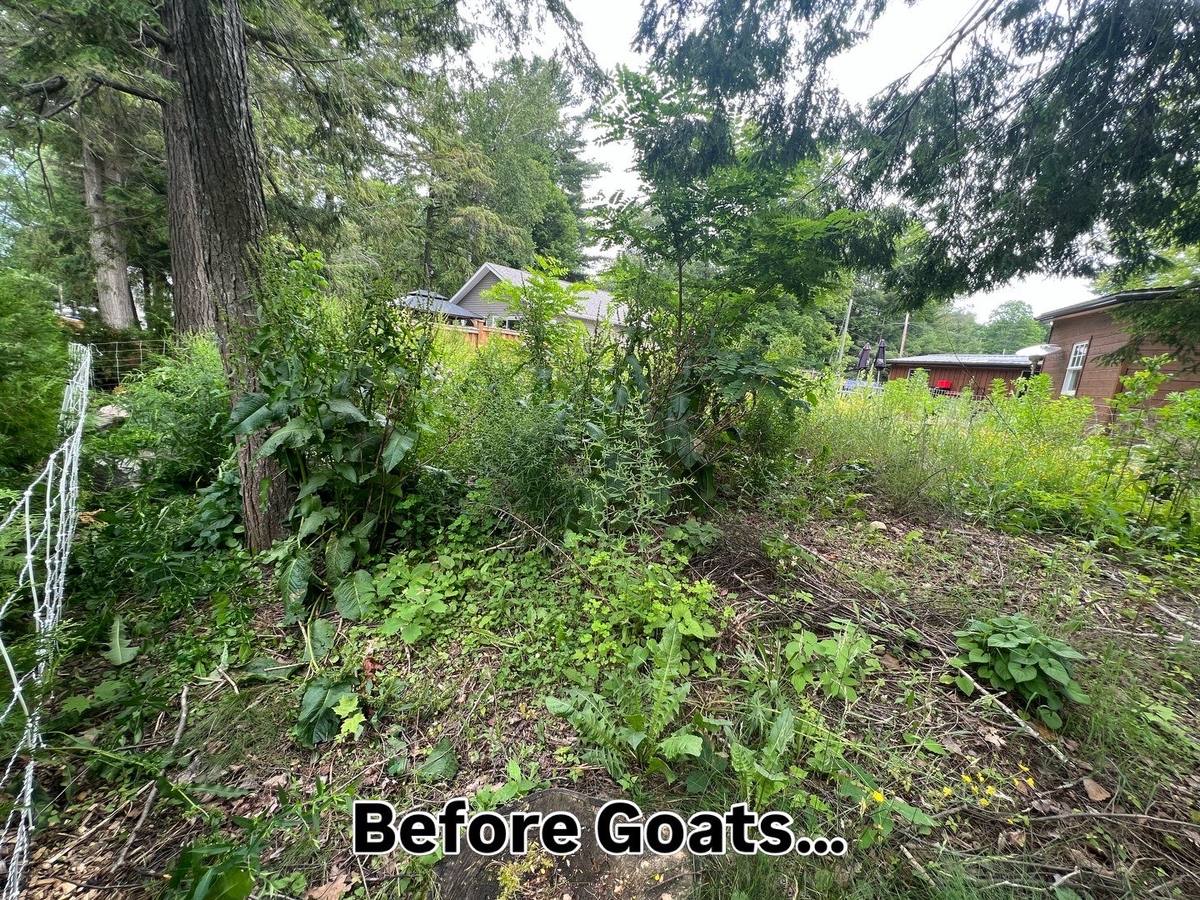
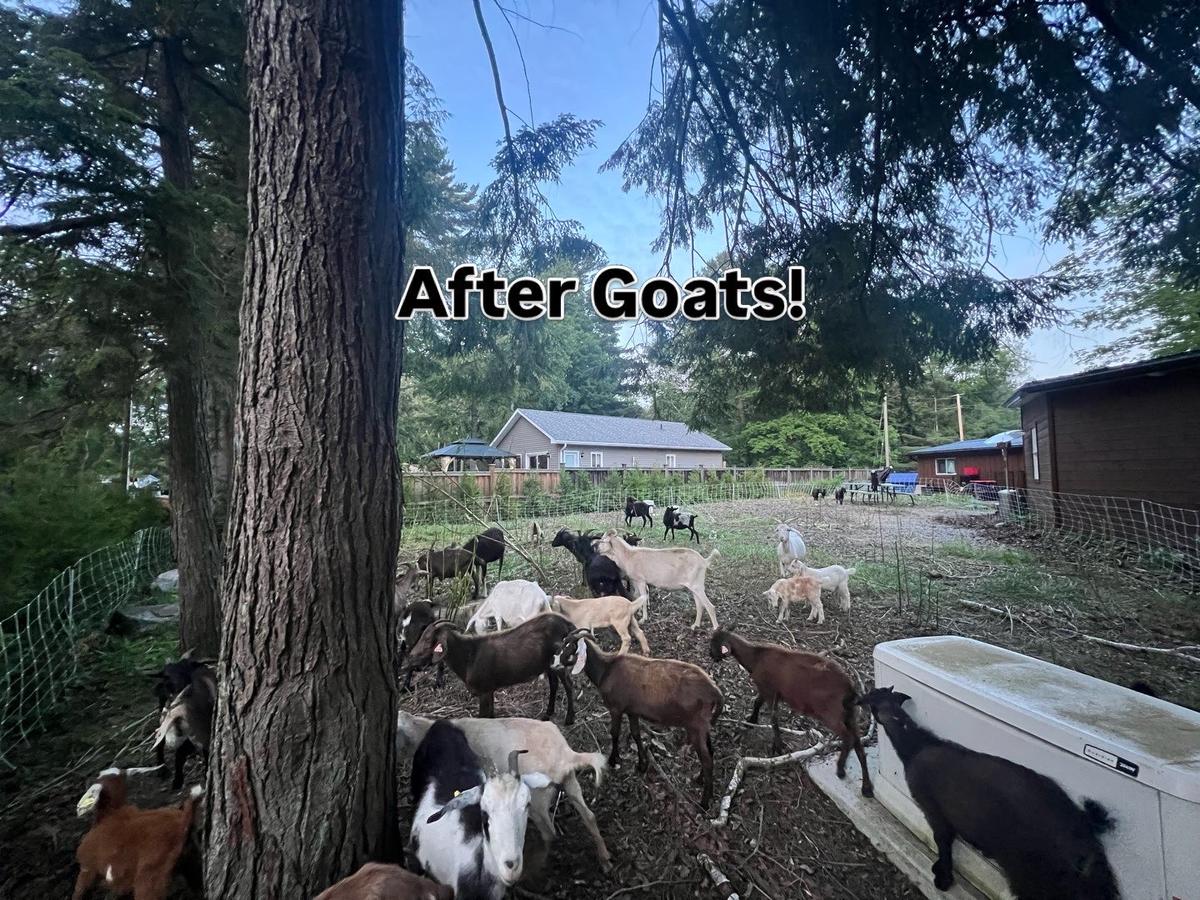
No herbicide was used on this property, and no machinery went into it. That is the whole job — the herd, portable fencing, and a few days.
Poison Ivy Questions We Get Asked
Do goats really eat poison ivy?
Yes — and they seek it out. Poison ivy is leafy, viney browse, which is exactly the kind of plant goats prefer over grass. The urushiol oil that causes the rash in people has no effect on them.
Can I catch poison ivy from the goats afterwards?
It's worth knowing that urushiol can stay on a goat's coat for a while after they've been working in poison ivy, and it can transfer to your skin if you handle them. This is why we ask visitors not to pet the goats during a poison ivy job. Our handlers take the same precaution.
Will one visit get rid of it completely?
Usually not. One visit will clear what you can see, which is often all a property owner wants before a summer. But poison ivy regrows from its root system, so genuinely wearing a patch down takes repeat grazing across a season or two. We'll be straight with you about what your particular site needs.
Is it safe around my kids, pets and garden?
Yes. Nothing is sprayed and nothing is left behind. The goats are contained inside portable electric fencing for the length of the job, and once they leave there is no residue to keep anyone off the area.
How much does poison ivy removal cost?
It depends on how big the area is, how thick the growth is, and how far we're travelling. We give a free quote after looking at the property, so you know the number before you commit. Get in touch with the details and we'll come out.
Do you cover my area?
We work across Simcoe County — Barrie, Orillia, Coldwater, Midland, Oro-Medonte and the surrounding townships. Our service areas page has the full list.
Have poison ivy you want gone?
Tell us where it is and how much of it there is, and we'll come and look at it. No herbicide, no rash, no machinery — just the herd doing what it does anyway.